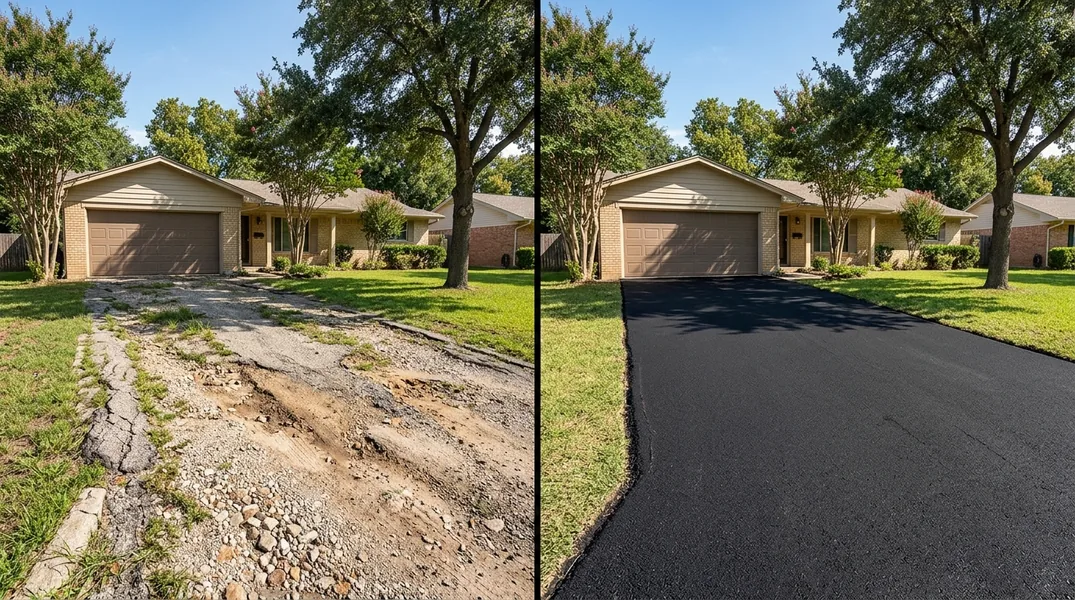
Asphalt vs. Concrete: The Core Differences
When you're planning a new driveway in Fort Worth, the choice between asphalt and concrete is often the first decision you'll face. Both materials have been trusted by homeowners for decades, but they perform very differently under the Texas heat and occasional freeze-thaw cycles we experience here.
Asphalt is a flexible, dark material made from bitumen and aggregate. It's the most common choice for residential driveways, and for good reason. Concrete, by contrast, is a rigid material composed of cement, water, and aggregate. While concrete appears more permanent, asphalt's flexibility actually makes it better suited to handling the expansion and contraction that occurs with temperature changes. In Fort Worth's climate, where summer temperatures regularly exceed 95 degrees Fahrenheit and winter can bring occasional freezing, asphalt's give prevents the cracking that concrete often develops.
The visual difference is also notable. Asphalt offers a clean, sleek black finish that many homeowners prefer for curb appeal, while concrete presents a lighter, more industrial appearance. Some people seal concrete to darken it, but this requires regular maintenance. Asphalt's dark color also helps it absorb heat, which can be beneficial in winter but requires proper maintenance during hot summers.
Asphalt Driveway Lifespan: How Long Will It Last?
Understanding the asphalt driveway lifespan is crucial when making your investment decision. A properly installed asphalt driveway typically lasts between 15 to 20 years, though some well-maintained driveways can reach 25 years. Concrete driveways, while often marketed as lasting 30 to 40 years, frequently require expensive repairs long before that timeframe due to cracking and spalling (surface deterioration). When you factor in repair costs for concrete, the total cost of ownership becomes comparable to or higher than asphalt.
The key to maximizing your asphalt driveway lifespan is preventive maintenance. Seal coating every two to three years protects the surface from UV rays, moisture, and oxidation. Regular cleaning and prompt pothole repair and asphalt patching can extend your driveway's life significantly. Fort Worth Asphalt Paving recommends addressing small cracks and potholes before they become major problems, as water infiltration is the primary cause of premature asphalt failure. Concrete, once cracked, is much more difficult and expensive to repair effectively, and cracks tend to spread as water seeps underneath and freezes.
Cost Comparison: Initial Installation and Long-Term Expenses
When evaluating asphalt vs concrete driveway costs, most homeowners find that asphalt is significantly more affordable upfront. Asphalt typically costs between $3 to $5 per square foot for installation, while concrete ranges from $6 to $12 per square foot, depending on thickness, finish, and local market conditions. For a standard 500-square-foot driveway, you could be looking at $1,500 to $2,500 for asphalt versus $3,000 to $6,000 for concrete.
However, the story doesn't end at installation. Concrete requires sealing every two to three years (around $200 to $500 per application) and may need crack repair or resurfacing. Asphalt requires seal coating every two to three years (typically $150 to $300) and occasional patching. The real cost advantage of asphalt emerges when you need major repairs. Asphalt resurfacing and overlay is a cost-effective option that can extend your driveway's life by 10 to 15 years for $1.50 to $3 per square foot. Concrete doesn't offer this option; instead, you're faced with either living with cracks or paying for complete removal and replacement.
For an accurate pricing estimate tailored to your specific driveway, contact Fort Worth Asphalt Paving at (817) 529-9224 or request a free estimate online. We'll evaluate your property and provide a detailed breakdown of costs for your preferred material.
Tar and Chip: A Budget-Friendly Alternative
Tar and chip, also known as chip seal or macadam, is a third option that appeals to homeowners seeking a middle ground between asphalt and concrete. This material consists of a layer of tar or bitumen topped with small stone chips, creating a rustic, textured appearance. It's significantly cheaper than both asphalt and concrete, typically costing $1 to $2 per square foot, making it attractive for budget-conscious homeowners or those with larger driveways.
The downside is durability and maintenance. Tar and chip driveways typically last only 5 to 7 years before requiring reapplication, and they shed loose stones regularly, especially in the first few months. They're also more susceptible to damage from heavy vehicles and don't hold up well in areas with intense heat or freeze-thaw cycles. In Fort Worth, where summer heat is intense, tar and chip can soften and become sticky. Additionally, these driveways require frequent raking and stone replacement, and they're not suitable for commercial properties or areas with significant traffic. While the initial savings are appealing, most homeowners find that the frequent maintenance and short lifespan make tar and chip a false economy compared to professional asphalt driveway paving and installation.
Can You Install Asphalt Over Concrete? Exploring Your Options
A common question homeowners ask is whether they can simply pave asphalt over an existing concrete driveway. The answer is yes, but with important caveats. Asphalt over concrete driveway installation is possible and can be a cost-effective solution if your concrete base is structurally sound. However, if the concrete is severely cracked, has settled unevenly, or is spalling, applying asphalt on top will not solve these underlying problems. The asphalt will eventually crack and fail in the same locations where the concrete is damaged.
Before proceeding with an asphalt driveway paving and installation over concrete, a professional inspection is essential. Fort Worth Asphalt Paving can assess whether your concrete base is suitable for overlay. If it is, we'll prepare the surface properly, which may include cleaning, patching minor cracks, and applying a bonding agent. This approach typically costs less than full concrete removal and replacement but more than installing asphalt on prepared soil. It's an excellent option for homeowners looking to refresh an aging concrete driveway without the expense of demolition.
Which Material Is Right for Your Fort Worth Home?
Choosing the right driveway material depends on your priorities, budget, and how long you plan to stay in your home. If you value affordability, flexibility, and the ability to extend your driveway's life through overlay, asphalt is the clear winner for most Fort Worth homeowners. Asphalt handles our Texas climate well, offers excellent curb appeal, and provides cost-effective repair and resurfacing options when needed.
Concrete makes sense if you're willing to pay premium upfront costs and don't mind the visual appearance of cracks as your driveway ages. It requires less frequent maintenance than asphalt seal coating, but repairs are expensive and limited. Tar and chip is best reserved for temporary solutions, rural properties, or situations where appearance is less important than minimizing initial expense.
The best way to make an informed decision is to get professional guidance. Fort Worth Asphalt Paving serves homeowners throughout Fort Worth and surrounding areas, and we're happy to discuss your specific needs. Call us at (817) 529-9224 or request a free estimate today. We'll evaluate your property, explain your options in detail, and help you choose the material that offers the best value for your situation.
Looking for a professional asphalt paving contractor in Fort Worth? Fort Worth Asphalt Paving responds fast for all your asphalt paving needs.
Get a Free Quote